Caspian etiketine sahip kayıtlar gösteriliyor. Tüm kayıtları göster

31 Mayıs 2013 Cuma

Turkey to begin negotiations on gas supplies from Turkmenistan

Trend

A framework agreement on cooperation for the supply of natural gas from Turkmenistan to Turkey can be called an illustrative result of the talks between the presidents of Turkmenistan and Turkey, Gurbanguly Berdimuhamedov and Abdullah Gul, who is on a state visit to Ashgabat.

Ankara periodically expresses its interest in the delivery of Caspian energy to Europe through Turkey, and the issue has been on the agenda since the mid nineties.

It is necessary to lay a 300-km pipeline under the Caspian Sea to Azerbaijan for the delivery of Turkmen resources to Europe. From there, the fuel reaches Turkey, which shares borders with Europe. The Trans-Caspian project could become a part of several large-scale projects such as Nabucco, AGRI and TANAP in which Ankara takes an active part.

The Trans-Caspian project at this stage is considered by experts as the most optimal way to deliver Turkmen gas to Europe.

Official Ashgabat believes that the consent of the parties, territories of which are covered by the project (Turkmenistan and Azerbaijan), is sufficient for laying the pipe under the Caspian Sea.

Baku has expressed readiness to provide its territory, transit opportunities and infrastructure for its implementation, as reported by the representatives of the State Oil Company of Azerbaijan (SOCAR).

Source:  http://en.trend.az/capital/energy/2156037.html

7 Mayıs 2013 Salı

Russia's Energy Bully Takes a Fall


Alexandros Petersen       Foreign Policy


Just a few years ago, Gazprom had Europe eating out of its hand. But now, the energy giant -- and Putin's power base -- looks set for hard times.

After years as Eurasia's energy bully, Russia's state-controlled natural gas monopoly, Gazprom, is getting a taste of its own medicine. Even as Gazprom seeks to build the tallest skyscraper in Europe as its new headquarters in St. Petersburg, pressure from Russia's neighbors led to a 15 percent decline in the company's profits last year, eating into the state budget. Moscow's single-minded focus on gas exports in an effort to become, in the words of President Vladimir Putin, an "energy superpower" has crippled its ability to adapt to profound changes in the global energy landscape -- from the shale gas revolution in North America to the dynamism of new market players such as Azerbaijan. Having spent the last decade making enemies in Central Europe and Central Asia, Gazprom and Russian decision-makers are now reaping what they have sown. 

Policymakers in European capitals could be forgiven for a little schadenfreude right now. Building on the legacy of Soviet gas exports to the Eastern Bloc and parts of Western Europe, Putin and his cohorts in the Kremlin have, for years, used Gazprom as a cudgel in Moscow's relations with European Union member states. Over the past decade, well over a third of EU gas imports have come from Russia, with a number of Eastern European states almost completely dependent on Gazprom. Bulgaria, for example, receives more than 95 percent of the natural gas it consumes from the company. Millions of European consumers shivered through the winters of 2006, 2008, and 2009 when Gazprom cut off supplies in order to squeeze middlemen in Ukraine, Belarus, Georgia, and Moldova who had had the temerity to buck Moscow's policies.

Turkey: The new energy hub of the Mediterranean ?


The Middle East Magazine

Israel's apparent rapprochement with Turkey following US President Barack Obama’s visit in March is being watched for its impact on several vital political fronts affecting the region, ranging from the intensifying conflict in Syria and fears about Iran’s nuclear ambitions to the possibility of a dramatic breakthrough in efforts to resume peace talks between Israel and the Palestinians. 

But one of its most immediate effects may be to heighten Turkey’s role as the undisputed hub for the transport of oil and gas from the Eastern Mediterranean to Europe and possibly on to Asia as well. Such a development could help to transform the economic prospects of highly indebted countries such as Jordan, Cyprus, Lebanon and the Palestinian Territories of the West Bank and Gaza, as well as Israel and Turkey, and bring with it dramatic new incentives for regional co-operation rather than conflict.
Equally important is the fact that Turkey is also embarking on a major programme to invest in renewable energy sources, including solar and hydropower, that could transform its energy exports in the future, to the benefit of consumers in Europe as well as at home. That, together with the fact that, at least in the medium-term, its gas exports to Europe, particularly to its southern and eastern countries, could help to reduce their reliance on both oil and coal – that are far more polluting than gas – could spell a brighter future for the younger generations in Europe, as well as in the Eastern Mediterranean.
Israeli Prime Minister Binyamin Netanyahu’s surprise phone call to Turkish Prime Minister Recip Erdogan on 22 March – in the wake of Obama’s visit – to apologise for the military action Israel took in boarding the Gaza flotilla ship Mavi Marmara in international waters three years ago, leaving nine Turkish citizens dead, is expected to be followed by other concrete moves to restore relations between Tel Aviv and Ankara. As well as compensation for the families of the victims, these are expected to include the exchange of ambassadors and the resumption of talks on exporting Israeli gas to Turkey, which, despite its key role in the transport of oil and gas, lacks its own hydrocarbon resources.

23 Nisan 2013 Salı

AGRI LNG: Potential for Project High if European Demand Remains Firm


Natural Gas Europe


The Interconnector Azerbaijan-Georgia-Romania-Hungary (AGRI) pipeline project is still possible, and could provide a stimulus for “east Caspian countries” to produce more gas, according to energy specialist Liana Jervalidze.

AGRI, a proposed source of liquid national gas (LNG) to Europe, could be an auxiliary to the major gas pipelines once they come on line in 2018, she said.

“We don’t see now immediately chances for this project to be realized but in ten years time when Shah Deniz Two and TANAP will be implemented and addition volumes of gas will be available in Azerbaijan from other projects…maybe there will be room left for LNG as part of Azerbaijan energy diversity strategy,” she said during the 12th Georgian International Oil, Gas, Infrastructure & Energy Conference in Tbilisi on March 26.
Jervalidze, a professor at Ilia State University in Tbilisi and Analyst on Geopolitics of Energy, outlined the potential – and the challenges – for the AGRI project during the conference.

AGRI, a joint project between ROMGAZ, Georgian Oil and Gas Corporation, SOCAR, and Hungry’s MVM, could help the European Union met their 2050 goals to diversify types and sources of energy, Jervalidze noted.

If put on line, AGRI would have the potential to bring between 2 bcm and 8 bcm to Europe.

8 Ocak 2013 Salı

Turkey’s Energy Challenges


Daniel WAGNER* & Giorgio CAFIERO**      CounterPunch


Ankara will soon be confronted with some difficult foreign policy decisions that could affect its long-term energy interests. The discovery of vast reserves of natural gas off the coasts of Cyprus and Israel could oblige Turkey to resolve longstanding disputes with its neighbours.

Turkey has managed to maintain impressive growth rates over the past decade in spite of a lack of indigenous sources of energy. Ankara has pursued a foreign policy aimed at diversifying the country’s energy imports while simultaneously positioning itself as a major energy hub. Turkey’s geostrategic position makes achieving this dual objective challenging, but it has managed to strike a balance between being assertive and deferential in acquiring and managing its energy supply. While the Turkish government’s power to influence events in the region is of course limited, it will be compelled to make some difficult foreign policy decisions in the near term that could substantially impact its long-term energy interests.

Turkey imports 91 percent of its oil and 98 percent of its natural gas. In 2011, approximately 51 percent of its oil came from Iran and 55 percent of its natural gas from Russia. Iraq’s resurrection as a major oil and gas exporter to the world offers Turkey an opportunity to become an increasingly influential energy hub between the Arabian Gulf and European markets. However, the tense triangular relationship between Turkey, Iraq and the Kurdish Regional Government has greatly complicated the energy trade with Iraq. This has also cast doubt about the long-term reliability of the Iraqi-Turkish pipeline that exports nearly 400,000 barrels per day to the important port of Ceyhan in southern Turkey. Turkey’s perennial battle with Kurdish separatists has served to ensure that the relationship with Iraq remains problematic and uncertain.

9 Mart 2011 Çarşamba

One more gas pipeline to be built for Shah Deniz gas transportation

 
Rufat ABBASOV     News.Az
 
There is a plan to lay an additional pipeline on par with existing South Caucasus gas corridor. 
 
Existing or new infrastructure will be used to transport Azerbaijani gas produced within the framework of Stage 2 of the Shah Deniz field development, according to the report of BP-Azerbaijan for 2010.

The report says the company is currently evaluating all existing variants and defining the route meeting all demands of the concerned parties. “A negotiation export group from among the representatives of BP, SOCAR, Statoil and Total was created to negotiate with Turkish and European gas consumers”, the report says.

Earlier, the president of BP-Azerbaijan Rashid Javanshir said there is a need to expand existing transport infrastructure to ensure export of gas within the framework of the second phase of the Shah Deniz field development.

7 Ocak 2011 Cuma

Russia: Talking Modernizing, Prioritizing Energy


Chris Weafer           Chief Strategist Uralsib Group

By Chris Weafer Chief Strategist Uralsib Group The most prominent buzzword in Russian politics today is “modernization”. Everybody understands that this is something that must happen or the country will face a declining growth rate and increasing social instability. In practice, the more significant actions continue to be in the energy sector.

Establishing Russia as the world’s biggest energy provider was critical in returning the country to a position of importance in geo-politics and in restoring the strong sense of national pride and confidence that, as much as improving living standards, underpins majority public support for Vladimir Putin. For that reason, maintaining average daily oil production at 10 million barrels per day and connecting additional gas pipes to Europe and Asia are by far the greater priorities in Russia. Keeping oil production at the current rate over the next ten years, i.e. the declared objective of government, while keeping tax revenue high enough to fund planned budget expenditures, is going to be a difficult juggling act. Nobody doubts that there will have to be changes to the current tax oil & gas sector structures and that capital investment in the industry will have to be increased. Otherwise average daily production will inevitably decline. The evidence points to the fact that remaining the world’s most important oil producer is a greater priority than, e.g. domestic projects like Skolkovo, for both domestic and geo-political reasons. The debate over how this may be achieved will likely dictate investor’s approach to the sector, and the debate over government fiscal priorities, later this year and post election. From a strategic viewpoint, the most likely outcome is that tax breaks will be applied to greenfield projects in East Siberia, Sakhalin, the Caspian and in other off-shore areas.

Energy Minister Shmatko recently said that Russia is considering creating new Production Sharing Agreements (PSAs) to involve international oil majors in new projects. That way the Finance Ministry can keep a high tax take from existing, albeit maturing, oil fields while the 10.0 million average daily oil target might be achieved with new investments in greenfield projects and using a lot of foreign investor capital. Russian PSAs have become are a bad word in the oil industry because of Sakhalin II. It is, however, important to bear in mind that Putin’s government did not like the PSAs that it inherited because of what it considered to be unfair terms agreed under the previous administration. However, over the past eight years new “rules of the game” have been established and PSAs concluded under these rules will be safer. That is entirely consistent with the oil major’s experiences in other oil regions over the past 100 years. The National Oil Companies of countries such as China, India, Malaysia and Gulf Arab states are already eager participants and several International Oil Companies, which are already active in Russia, e.g. Shell, BP, Total, ENI, are also expected to have active roles.

Barroso to push for Nabucco in Azerbaijan, Turkmenistan


BRUSSELS

European Commission President Jose Manuel Barroso announced Wednesday that he will visit Azerbaijan and Turkmenistan next week to discuss the Nabucco gas pipeline project.

 "I will be traveling next week together with [Energy] Commissioner [Guenther] Oettinger to Azerbaijan and Turkmenistan to push for the Southern Corridor initiative," Russian state news service RIA Novosti quoted Barroso as saying. "Certainly, our goal is to have the clear commitments of those countries regarding the Southern Corridor and including, of course, Nabucco."

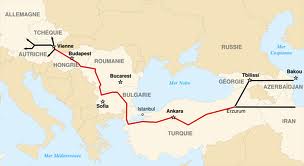
Barroso will visit Azerbaijan and Turkmenistan on Jan. 13-15. The Nabucco project hopes to pump gas from the Caspian region to European countries via Azerbaijan, Georgia, Turkey, Bulgaria, Hungary, Romania and Austria while supporters of the project seek to have Azerbaijan and Turkmenistan as major gas suppliers. The project has also sought to secure gas supplies from the Middle East, although tensions in the region continue to overshadow these prospects. So far, no concrete gas supply or purchase commitments have been agreed.

The project is viewed by some as a key element of the Western strategy to reduce Europe's dependence on Russian energy supplies. The project was initially proposed almost 10 years ago but regional politics have since stalled further progress on the project. Investors are expected to make a final decision on the project by the end of 2011.

If built, the $11 billion pipeline project is expected to have an annual capacity of 31 billion cubic meters of gas while a target operational date has been set for 2015. Turkish state-owned crude oil and natural gas company BOTAŞ is one of the major partners of the Nabucco project.