Turkey energy hub etiketine sahip kayıtlar gösteriliyor. Tüm kayıtları göster

25 Mart 2014 Salı

Turkey ‘earns $12 billion’ from Baku-Tbilisi-Ceyhan (BTC) Pipeline


AA

The Turkish Petroleum Corporation (TPAO) has earned $12 billion from the Baku-Tbilisi-Ceyhan (BTC) crude oil pipeline since 2005, when oil from Baku was first pumped, Turkish Minister of Energy Taner Yıldız has said.

During his speech in the southern province of Adana, Yıldız underlined the importance of the BTC pipeline for the region and trade volume created for the country.

He stated the TPAO has 6.5 percent of the shares in the BTC crude oil pipeline. British Petroleum (BP) and State Oil Company of the Azerbaijan Republic (SOCAR) hold the majority of the shares in the BTC pipeline, with 30 percent and 20 percent respectively. 

The pipeline has transported more than 1.8 billion barrels of crude oil to date.

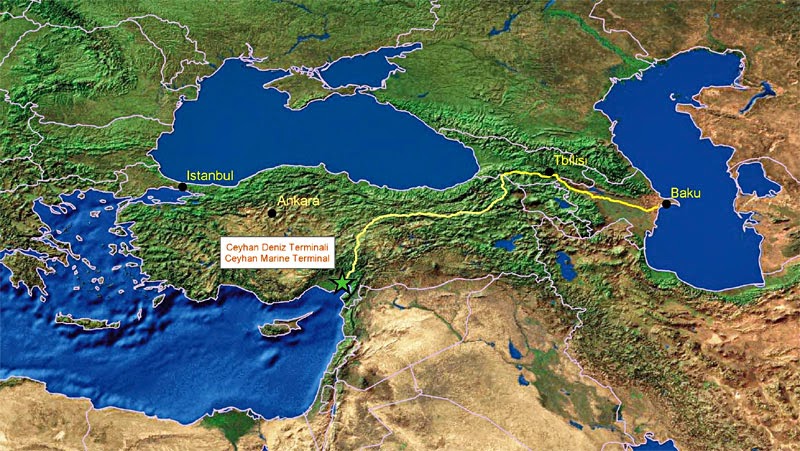
Nearly 3 percent of the world’s oil trade is flowing along the BTC and Kirkuk-Yumurtalık crude oil pipelines through Turkey. The BTC pipeline has been transporting Azeri oil from the Caspian Sea to the Ceyhan Port of Turkey through the Georgian capital of Tblisi. The oil is then exported to European markets via the Mediterranean Sea.

12 Şubat 2014 Çarşamba

Turkey’s gas trading hub dream realistic: Oxford Study


Reuters

Turkey’s vision of becoming a gas trading hub is realistic given its diversity of supply but it would need to speed up market reform and invest more in gas infrastructure, an Oxford University study said on Feb. 10.

Turkey has long wanted to have a major power and gas market, capitalizing on growing domestic demand for gas and its proximity to cheap natural gas resources.

It has few natural resources of its own, but is at the centre of nearly all gas pipelines that would link Central Asia to Europe, defining the regional market for decades to come.

Turkey’s rise to prominence in energy markets would also add to its growing influence as a major economic and political player between Central Asia, the Middle East and the European Union, to which Ankara aspires to be a member.

According to state pipeline company BOTAS, Turkish natural gas demand is forecast to grow to 81 billion cubic meters (bcm) a year by 2030 from the current 47 bcm/yr.

It could potentially trade up to 100 bcm of gas a year when large-scale investments in gas infrastructure have taken place, such as new liquefied natural (LNG) gas and storage facilities, said the paper by the Oxford Institute for Energy Studies.